On the surface, makeup for a film set and makeup for a photoshoot look like the same job: a face, a chair, a camera. In practice they ask for quite different thinking. Understanding the difference helps directors, producers, photographers and talent plan better, and helps everyone avoid surprises once the camera is rolling.
One moment versus many hours
A photograph is a single frozen moment. If the light, angle and expression are right for a fraction of a second, the image works. Everything about photographic makeup can be tuned towards that moment: the exact angle of the face, the position of the light, the way the lens sees the skin.
Film and video capture time. The same face is seen talking, laughing, turning and reacting, often for minutes at a time, and then again in take after take across a long day. Makeup for the moving image has to look natural and consistent from every angle the scene might use, and it has to survive the hours in between.
A still image can be taken from the most flattering angle. A moving camera, or a moving actor, will eventually find every other angle too. Makeup that looks perfect straight on can read differently in profile, in a tight close-up during dialogue, or when an actor smiles broadly or frowns.
For film, the work needs to move with the face. Texture, placement and blending are all planned with expression in mind, so that nothing draws attention to itself when the actor is in full flow. For photography, there is often more room for sharper, more graphic choices because the expression is held and controlled.
Continuity is everything on a film set
Scenes are rarely shot in story order. A character might be filmed leaving the house in the morning and arriving at the office in the afternoon, with a week of other scenes shot in between. To the audience, those two moments happen minutes apart, so the face has to match exactly.
This is why continuity is central to film and television makeup. It involves careful notes and reference photographs for every look, attention to small details such as where a smudge of kajal sits or how flushed the cheeks are after a running scene, and a clear system for recreating each look reliably on another day. In photography, each set-up usually stands on its own, so continuity matters far less.
Light, heat and the length of the day
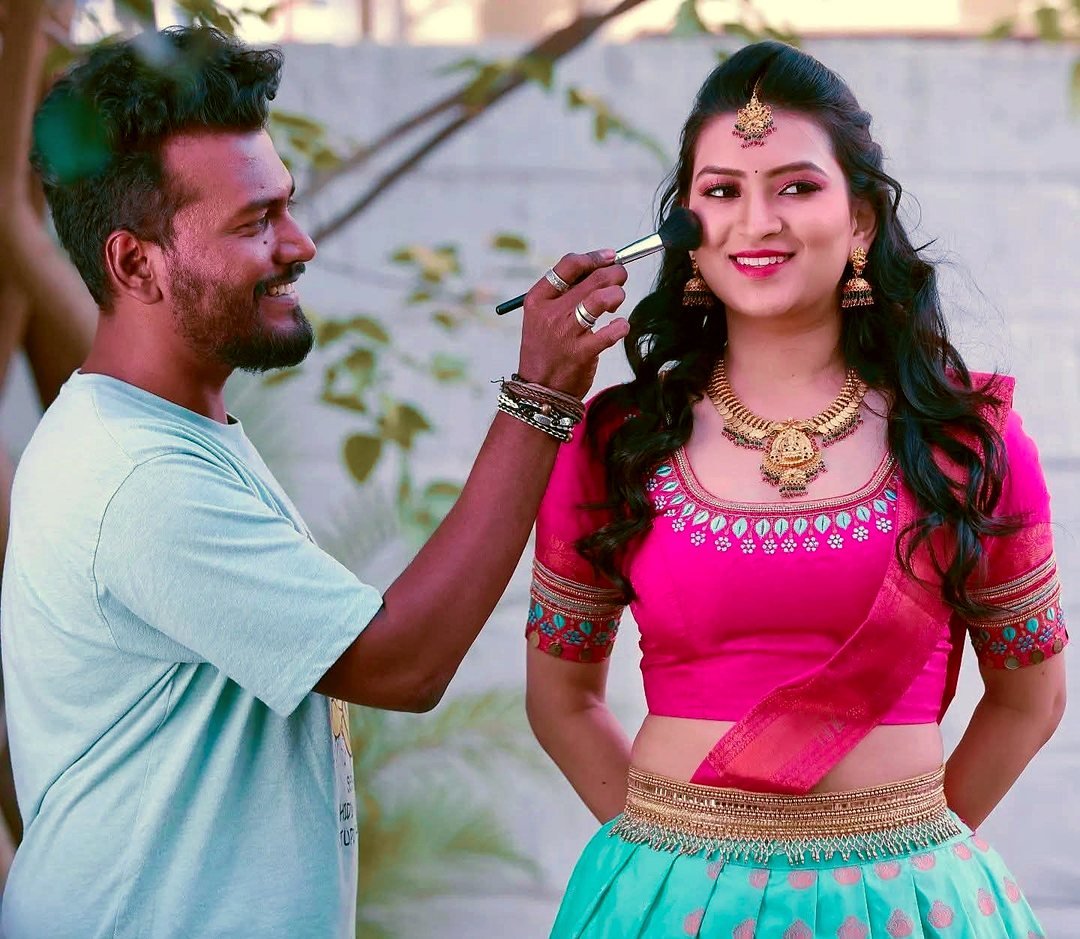
Photography often uses flash or strobe lighting, which fires for a fraction of a second, along with modelling lights and natural daylight. Film and video sets use continuous light for long stretches, and those lights can be warm. Add outdoor schedules in daylight, summer afternoons and long location days, and skin naturally changes over the hours.
That is why film makeup is as much about maintenance as application. Expect regular checks between takes, attention to shine and sweat, and touch-ups that keep the look identical rather than fresher than it was in the previous shot. On a photoshoot, touch-ups are also important, but the rhythm is usually shorter, built around set-ups and outfit changes rather than an entire shooting schedule.
Retouching and what the camera keeps
Many photographs are retouched afterwards, and a good photographer and retoucher can refine skin, remove stray hairs or balance tones. Retouching moving footage frame by frame is far more involved, so productions generally rely much more on getting the makeup right in camera.
This changes priorities. In photography, the makeup artist and retoucher often work as a team. In film, the makeup has to carry most of that responsibility on its own, under whatever light the scene uses.
A photograph asks makeup to be perfect for one moment. Film asks it to be believable for every moment, and identical the next time the scene is shot.
Character versus beauty
Much commercial and fashion photography is about an idealised version of a person: polished skin, a clear mood, a strong look. Film and television makeup frequently serves a character instead. An actor may need to look tired after a sleepless night, weathered from years of outdoor work, older or younger, unwell, or simply like someone who isn’t wearing any makeup at all.
Often the most demanding film makeup is the kind the audience never notices. The goal is truth to the story, which sometimes means deliberately holding back.
What this means when you plan
Whichever medium you are working in, tell your makeup artist early about:
- Whether the shoot is stills, motion or a hybrid of both on the same day
- The number of shoot days, looks and changes per person
- Indoor, outdoor or studio locations, and the expected lighting
- Any continuity requirements across days or scenes
- Character notes, references or a script breakdown where relevant
Hybrid shoots, where a brand captures stills and video in one session, are increasingly common, and they benefit most from this conversation. You can read more about film and TV makeup and advertising and photoshoot makeup, or see how to enquire about makeup for a production for a practical checklist. When you’re ready, share your project details or send a message on WhatsApp to start the conversation.
Planning something similar? Share your date, location and the look you have in mind, and Aarav will get back to you with availability and next steps.
Enquire on WhatsApp (opens WhatsApp)Explore Film & TV Makeup